
To Pass or Not to Pass ? That is the Question (when accepting credit cards)
Why more merchants are rethinking “the cost of doing business”
In the contemporary world of commerce, credit card transactions have become nearly impossible to avoid, offering convenience to consumers and opening up a myriad of opportunities for merchants. However, with this convenience comes the burden of credit card processing fees, which for decades have been significantly impacting merchants’ bottom line. In this article we will explore why business owners might want to consider passing these costs onto the cardholder, highlighting the financial, strategic, and customer-centric advantages of such a decision.
Who said that paying to take payments was just the “cost of doing business” anyway?
More business owners are beginning to rethink that assumption.
The Hidden Cost of Convenience
Every time a customer pays with a credit card, a percentage of that sale is lost to processing fees. While it may seem small on a per-transaction basis, over time, it adds up – quickly and quietly eating into your margins. Certainly, you didn’t start your business to lose a piece of it with every sale?
And unlike rent, payroll, or inventory, this is a cost that many business owners never question.
But maybe they should...
Protecting Your Profit Without Raising Prices Across the Board
One of the most compelling reasons for merchants to pass on interchange rates to cardholders is the financial relief it provides. By transferring the cost burden, businesses can protect their profit margins and better manage their operating expenses. This is particularly important in industries with slim margins, where even small fee reductions can make a significant difference in overall profitability.
Additionally, passing on interchange fees can improve cash flow management. Without the burden of these fees, merchants can allocate funds more efficiently, investing in inventory, marketing, or other growth opportunities. This financial flexibility can be pivotal in maintaining a competitive edge and ensuring long-term sustainability.
This approach allows you to:
🔸Maintain competitive pricing
🔸Avoid blanket price increases
🔸Keep more of each sale
For businesses operating on tight margins, that difference can be significant.
Lower Prices for Customers Who Cost You Less
When merchants incorporate the cost of processing into the cost of doing business, it often results in higher prices for all customers, regardless of their payment method. By transparently passing on these fees to credit card users, merchants can maintain lower base prices, benefiting and incentivizing cash customers. Encouraging a shift towards alternative payment methods can result in significant savings over time.
Why should every customer pay more just because some choose credit?
From Exception to Expectation
The practice of passing on interchange fees is becoming increasingly common across various industries. As more merchants adopt this approach, it normalizes the practice and reduces the risk of customer dissatisfaction. Being transparent about these costs aligns with modern consumer expectations of honesty and openness in business practices.
As more businesses adopt this model, customer awareness and acceptance continue to grow.
In fact, today’s consumers are more comfortable than ever with transparent pricing - especially when it’s clearly explained.
It’s Not If You Do It - It’s How You Do It
The success of passing fees doesn’t come down to the decision itself. It comes down to execution.
While there are many advantages to passing on interchange fees, merchants must approach this strategy thoughtfully to avoid negative customer reactions. Clear communication and transparency are key to ensuring customer understanding and acceptance.
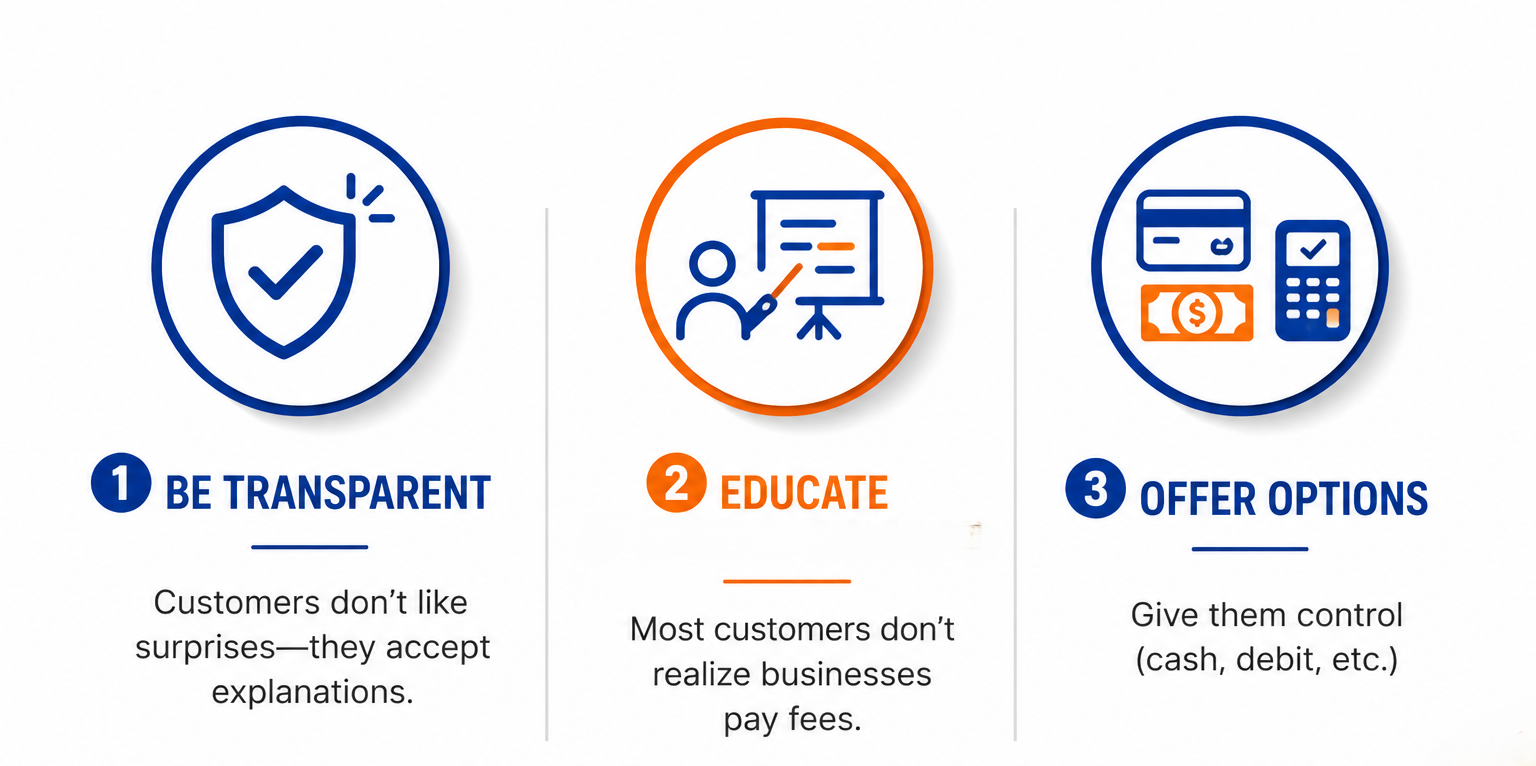
Be Transparent + Educate
Educating customers about the cost of credit card transactions and the benefits of alternative payment methods can foster understanding and acceptance.
Merchants can provide information on the various payment options available and highlight any incentives for using lower-cost methods, such as discounts or loyalty rewards. The reality is that unless a cardholder is a merchant themselves, they probably do not know that the use of their credit card is negatively impacting your business. A simple explanation goes a long way.
Clarity Eliminates Pushback
Customer resistance is rarely about the fee itself - it’s about confusion.
Merchants should clearly communicate the rationale behind passing on interchange fees, emphasizing the benefits of lower base prices and price transparency. This can be done through signage at the point of sale, website information, and direct communication with customers. Providing direct explanations can help mitigate any potential pushback and builds confidence in your pricing model.
A Smarter Way to Accept Payments
In a nutshell passing on credit card processing fees to cardholders is a strategic decision that can offer significant financial and operational benefits to merchants. By enhancing cash flow, promoting transparency, encouraging alternative payment methods, and aligning with industry trends, merchants can create a more sustainable and customer-friendly business model.
Careful implementation and clear communication are crucial to ensuring customer acceptance and maximizing the advantages of this approach. As the commerce landscape continues to evolve, adopting such forward-thinking practices will be key to maintaining a competitive edge and achieving long-term success.
Not Sure If This Would Work for Your Business?
Before making any changes, it’s important to understand exactly what you are currently paying and where opportunities to optimize exist.
Not So Fun Fact: There are many merchant service providers that will sell you on “Free Processing” without ever taking your actual cost of processing into account - then charge your clients the highest rate possible (4% is the cap).
Therefore, it is imperative to understand your true cost, prior to switching to a program that passes the rate to the cardholder.
Get your FREE MerchantCheckUp™ and see what’s really happening behind the scenes of your payment processing.